My first project as a design manager: the airline website it built, and the team I nearly lost
A regional Malaysia-based airline needed its website rebuilt. Navigation, booking, page structure and hierarchy were all working against travellers. I led the research, the new information architecture and the design system that the live site still stands on. It was my first project as a design manager, and I nearly lost my team's confidence in the first months. I earned it back by changing how I led. The airline came back for two more projects.
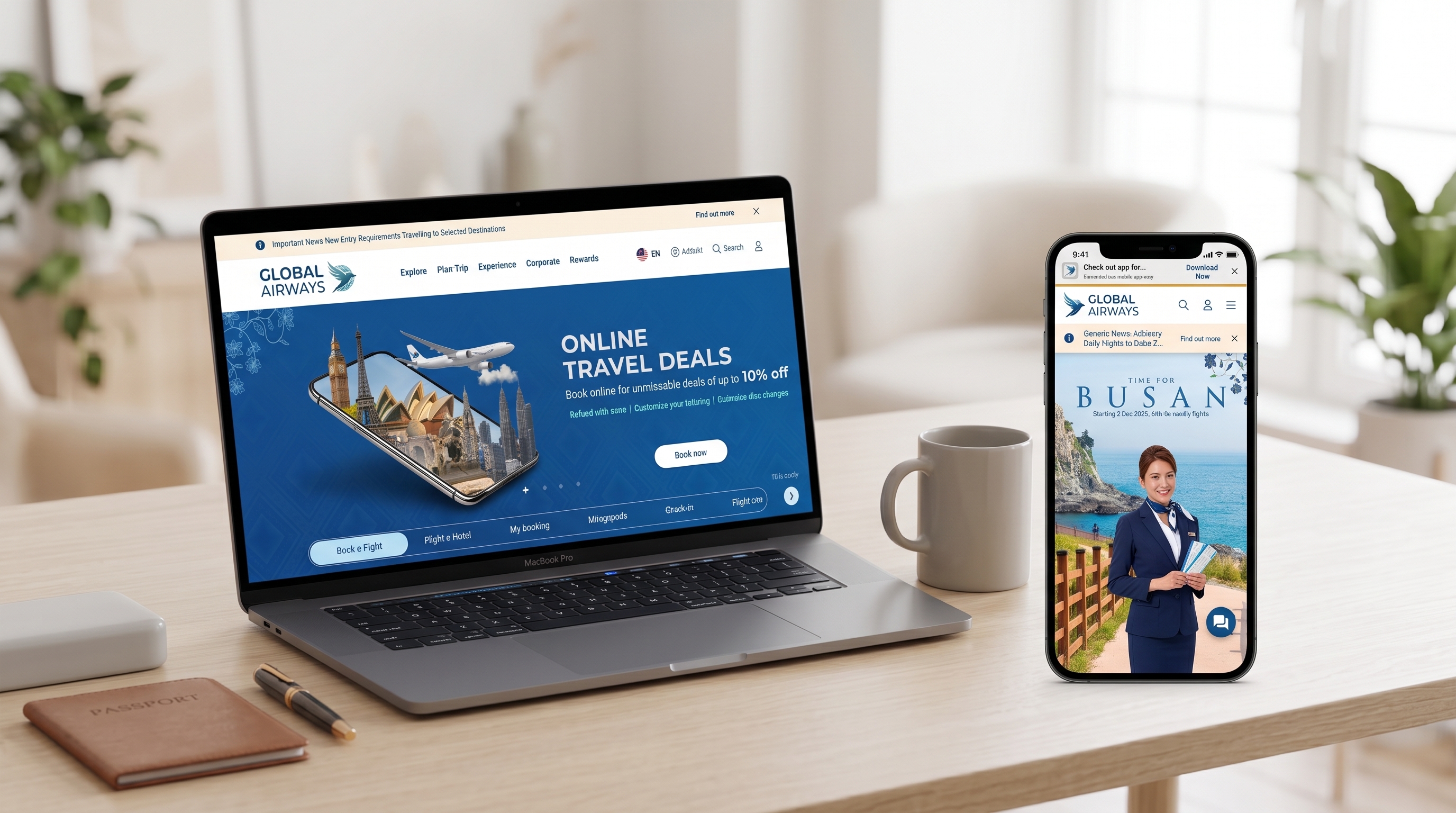
The call
The brief arrived as five problems:
- The navigation did not match how travellers look for things.
- The booking flow was hard to get through.
- Individual pages had no clear order.
- Pages were organised without one logic across the site.
- Hierarchy changed from page to page, so nothing felt levelled.
They were really one problem, seen from five angles. The site had no single structure underneath it.
A second constraint mattered more than any single screen. This is a local-first airline. The answer could not be a copy of what global carriers do. It had to make sense to Malaysian travellers first.
It was also my first project with a team of my own to lead:
- I owned: research direction, the revamped information architecture, design direction, the design system, and the presentation to the airline's C-suite.
- Led through the team: the UX designers ran the competitive and market research with me and built out the new IA. The UI designers turned the system into screens. The senior consultant brought depth where I needed a second senior voice.
- Partnered on: feasibility and scope with the business analysts, the project manager and the developers.
Three early bets
Research before any screen. There was pressure to show designs early. I chose to go deep on research first: the competitive landscape, what other airlines were doing, and where they fell short for a local traveller. It cost time at the start. It paid back every time a design decision was challenged, because the answer already existed as evidence.
An information architecture built around the traveller. From that research, the team and I rebuilt how pages are grouped, ordered and levelled, and how the navigation exposes them. The booking flow was restructured on the same logic, so it reads as the next step of the site rather than a separate system bolted on.
The design system as the foundation, not a deliverable. It was slower than jumping to finished pages. It was the right trade. That system grew into the ecosystem later designs were built on, and it is still what the current site stands on.
The trials outside the team
With the developers. Some of our ideas were not feasible to build. We argued. I kept my position upfront, laid out the pros and cons of each option, and gave the developers more context on how an idea could be implemented. Where a constraint was real, I designed around it instead of fighting it.
With the C-suite. I led the presentation to the airline's senior leadership. My first drafts tried to say too much. I cut it back to what the executives needed to decide. When I was challenged, I kept the argument short and led by evidence. The presentation went well.
The low point: I nearly lost my team
The hardest trial was inside the team, and it was mine.
I was new to managing, and I made mistakes. Some things were not communicated when they should have been. Sometimes I was late. At the same time my life outside work changed: I had just become a father and was bringing my family to live with me, and I was mentoring designers on the side. The load did not balance.
Then the feedback came. The team was struggling to get on with the work. There was also a stretch when I was on leave and the team picked up work that was mine to do, because I had not planned cover for my absence.
The turn
I took the feedback and changed how I worked:
- I communicated earlier and more often, before people had to ask.
- I went direct. I connected with the business analysts and developers myself instead of relaying through others.
- I learned to switch modes on purpose. Less teaching and more direction when the team needed a decision. Less direction and more collaboration when it needed room to think.
By the end of the project, the team that had doubted me trusted me again.
What came back with me
- The foundations held. The information architecture, navigation, booking structure and design system this team built underpin the airline's current website. The designs were handed over, built and shipped.
- The client came back, twice. The airline brought us back to revamp the business side of the website, and again for its Islamic offering. I led that work too.
- The team recovered. Confidence that had dropped early was restored by the end.
- The cost. The project started rough. Delays early on and the leave I failed to plan for put pressure on the team that should have been mine to carry.
If I took the call again
I would own the manager role from the first day, not the third month. Decide what needs to be communicated and when. Unblock the team before they feel the weight, not after. Plan leave with a handover so nobody picks up my work by surprise.
Three things I still use on every project:
- Research first, so every argument has evidence waiting for it.
- Mode switching. Prescriptive when the team needs a decision, collaborative when it needs room.
- Executive presentations are decisions, not lessons. Say less, prove more.
Want the longer version of this story?
I can walk you through the decisions, the trade-offs and what I would do next.